01
Project summary
Open with a short summary of the client’s need and what the proposal is meant to cover.
A freelance proposal template should do more than show a price. It should help the client understand the project, trust the process, see the scope and timeline clearly, and know exactly how to move forward if they want to say yes.
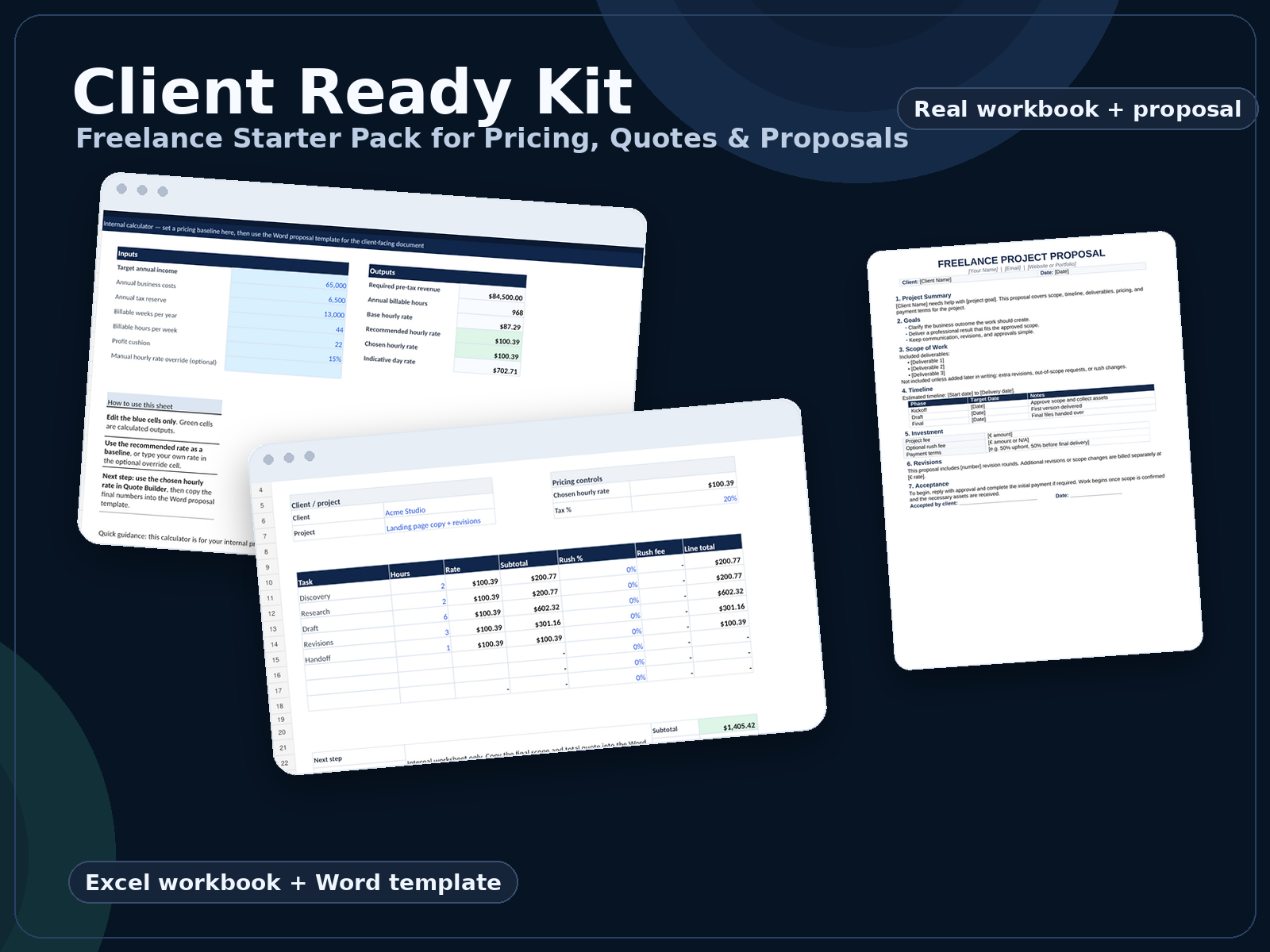
A proposal is the fuller client-facing document that turns your pricing and scope into something the client can review with confidence. It should make the work feel organized, understandable, and ready to approve.
Open with a short summary of the client’s need and what the proposal is meant to cover.
Show exactly what is included so the project feels concrete and expectations are easier to manage.
Help the client picture how the project will move from kickoff to delivery.
Present the project fee clearly and make the payment structure easy to understand.
Define what is included and what would count as additional work, change requests, or extra rounds.
End with a simple approval path so the client knows how to confirm the project and move forward.
A strong proposal does not need to be overly long. It just needs enough structure to remove confusion, build confidence, and give the client a clean way to say yes.
Here is a simple example of how a freelance proposal can be organized. The wording will vary by project, but the structure should help the client understand the work, the investment, and the next step.
| Project | Website copy refresh for a service business website |
|---|---|
| Goal | Clarify messaging, improve the homepage, and make the site easier for leads to understand |
| Scope | Homepage, about page, contact page copy, 2 rounds of revisions |
| Timeline | 2 weeks from project start |
| Investment | $1,200 USD |
| Payment terms | 50% upfront, 50% on final delivery |
| Exclusions | Brand strategy workshop, extra pages, and additional revision rounds not included |
| Approval | Reply to approve the proposal and confirm the preferred project start date |
Many freelancers use the words interchangeably, but they often serve slightly different purposes. Understanding the difference helps you send the right document at the right stage.
A quote usually focuses on scope, deliverables, price, and next steps. It is often shorter and more directly tied to the estimate itself.
A proposal usually adds more framing around the work, such as project goals, context, process, timeline, and approval language. It is often the more polished client-facing document.
In a simple workflow, you might estimate internally, structure the price as a quote, and then turn that into a fuller proposal when the project needs more context, reassurance, or polish.
The cleanest workflow is to calculate and structure the numbers internally first, then move the final scope and pricing into the proposal. That way the client sees a polished document instead of the messy logic behind it.
Many proposals fail at the last step: they explain the work, but they do not clearly tell the client how to move forward. The end of the proposal should make approval feel simple and low-friction.
Use a short, direct next step such as: “If this proposal looks good, reply to confirm approval and preferred start date.” The goal is clarity, not complexity.
Do not end vaguely. If the client finishes the document and still does not know whether they should reply, sign, schedule a call, or wait for another message, the proposal is weaker than it should be.
Most weak proposals are not too short or too long. They are usually unclear about the work, the boundaries, or the next step.
If the client cannot clearly see what is included, the proposal creates uncertainty instead of confidence.
The proposal should feel clear and polished. Clients do not need every internal calculation, note, or worksheet decision.
If the document does not explain revision limits or scope edges, misunderstandings become much more likely later.
A proposal should not end vaguely. It should tell the client exactly how to move forward.
Better proposals usually come from a better process underneath them, not just a nicer-looking file.
Start with your pricing calculator and quote worksheet so the numbers make sense before they appear in the proposal.
Decide what is included, what success looks like, and what the project is actually meant to deliver.
Add structure, context, timeline, and approval language so the document feels polished and easy to review.
Once the proposal is accepted, invoice according to the agreed payment timing and continue the workflow cleanly.
Client Ready Kit includes the internal workbook for pricing and quotes plus the client-facing Word proposal template, so you can build cleaner proposals without starting from scratch.
Quick answers around freelance proposals and client-facing project documents.
A freelance proposal should usually include a project summary, scope of work, timeline, pricing, revision boundaries, and a clear approval step.
A quote is usually more focused on scope and price. A proposal often adds more context, goals, process, timeline, and approval language.
Usually yes. A proposal often works best when it includes both the scope and the investment so the client can approve the full picture.
Detailed enough to remove confusion, but not so detailed that it becomes bloated or hard to approve.
A proposal should end with a clear approval step so the client knows exactly how to move forward, confirm the project, and start the next stage.
Usually no. The internal workbook is for pricing and quote structure. The client should generally receive the cleaned proposal document instead.